Acosmism and the Non-Existence of the World
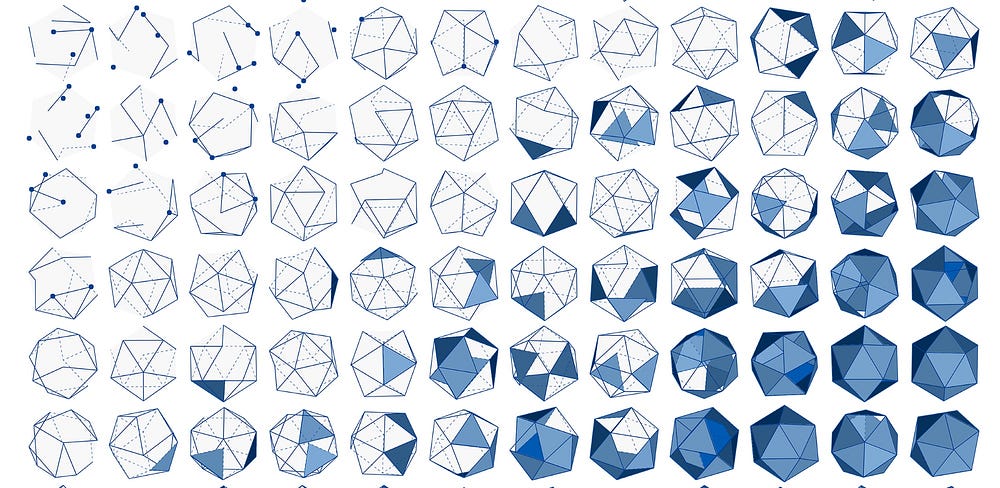
In my opinion, of course, there is nothing in the universe of created things that does not need the concept of every other thing in the universe for its perfect concept, since each thing influences every other in such a way that, if it were imagined that that thing were removed or different, everything in the world would be different from what it is now. — Leibniz, writing to Burchard de Volder
Though we talk all the time a great deal about it, contrary to popular belief, there is no such thing as the “World,” however much you may insist to the contrary. I don’t mean by this to say that the reality of life is an illusion; that’s all only just a dream. You are certainly alive right now, and the things around you, wherever you happen to be as you read this — your cup of coffee, or the chair your sitting in, or the cigarette between your fingers — these are all “real”. Yes. It’s not this kind of thing I’m disputing. Neither do I dispute the existence of the planet Earth, or most of the kinds of things it’s said to contain. These are all fine in my book as well, and I’ll simply concede that they are, indeed, real in a conventional, ordinary sense. So on these counts, you can spare yourself any anxiety and reserve your incredulity for the time being.
But none of these things are the World, are they? Where in the World is the World? Can you locate the World on a map for me, if I put you on the spot? Certainly, these kinds of questions are just a bit of rhetorical knavery from me to you, but the point I mean to prod you to is this: by World we designate something very large, and all-encompassing, and grand, and we take the nature of this construct entirely for granted as we constantly deploy it in every discussion we have about every subject under the sun, whatever it may be.
In actuality though, in our use of this concept, in our reference to the World, we draw together as a mental unity an infinity of combinations and possibilities. To be more precise about it we can follow Leibniz in the Theodicy in defining the World as: “the whole succession and the whole agglomeration of all existent things,” which, he goes onto say, “must be reckoned all together as one world or, if you will, as one Universe.” The emphasis on the word “Must” is my own, as Leibniz is ultimately pondering here the question of why there is for us only one World, and not “several worlds which might have existed in different times and different places,” and why even conceding the existence of only a single World which “fills all times and all places,” it nevertheless “still remains true that one might have filled them in innumerable ways, and that there is an infinitude of possible worlds among which God must have chosen.” Not only did God choose one, he chose, famously, according to Leibniz, the very best one of all such possibilities “in accordance with supreme reason.”
Though it’s always tempting to read in our own way, according to your own senses of words, and our own conceptual prejudices, this is never wise if one wishes to grasp the significance of a thought. For this reason, any commonsensical interpretation of Leibniz’s purpose here should be put aside for the moment, as he isn’t here talking about the World, or the Universe, as a physical “object” only, but also as a mental one, as he’s discussing not only tangible objects and celestial bodies, but also “substances” generally, as in the spiritual and intellectual essences of those objects.
Not only is it just to objects and their essences even which Leibniz is referring, but beyond those, he includes even their various combinations, as in the manifold ways in which things interact with one another, substantially and physically, intellectually and mechanically. There are, in fact, an “infinitely infinite” number of such combinations, as after all, combinations comprising one set of things can be considered in combination with other combinations, and these combinations in combination with one another ad infinitum.
Though this may seem all far too abstract to bother with, the point is really simple enough, should one take a moment to consider the matter, as by World we really mean no simple thing at all, but rather a dynamical system of things. A system of not just things, but other systems, and everything which exists in the world really, it must be admitted, can be thought of in connection with other things in an infinite number of possible senses. So the World-System includes out thinking, our divisions of things into categories, scientific, historical, cultural, the systems of those divisions, and so on and so forth forever.
Yet despite the infinite tangle in which all things are connected to all other things in an infinite number of ways, we think of the totality of these infinities by means of a single concept: World.
That there is such a World, that it’s simply something given to us, that we can appraise it, and evaluate the condition of the systems within it at a kind of mental glance, all this is taken far too easily for granted. So abstract a consideration certainly is not required for us to live our lives in the ordinary sense, where we go from day to day around the towns and cities where we live, buying groceries, going to the dentist, taking a stroll around the block, no one is saying otherwise. Yet, how often do we restrict our thoughts to this sphere of things only? To what is knowable and immediate and what we really have a sense of for ourselves? No, we’re all guilty of quite easily moving in our thoughts to much wider realms beyond that of our genuine and unmediated experiences, to abstract conceptions of global economics, geopolitics, the collective cultural consciousness of the country in which we live, or the “West,” or even Humanity generally in a radical, world-historical sense.
That we are all so quick to extrapolate from so little to such grandiose dominions of mind should, I hope, seem to you a bit comical when put this way, wouldn’t you agree? That we make so casually all kinds of authoritative proclamations on the “infinity of infinities” which comprise the World is a kind of petty, tyrannical arrogance we’re all guilty of engaging in, yet rarely are willing to own up to.
However, though this last point is one I feel worth taking a moment to underscore, it’s not the one I’m here endeavoring to make in the last resort, as what concerns me really is the construction of the World, and the particular manner in which that’s been undertaken throughout the years, going back to Leibniz’s time at least. Not the World, again, as a physical place merely, but as the idea of the totality of the infinity of infinities which ordinary people are so quick to assume is simply something given to them by their own dim, pre-cognitive sensation of the smell of their dinner or the texture of the carpet beneath their feet. No, you have not ascended to a totalizing intellectual conception of compounded infinities in between whiffs of your Yankee candle, of that much I am indeed certain if nothing else.
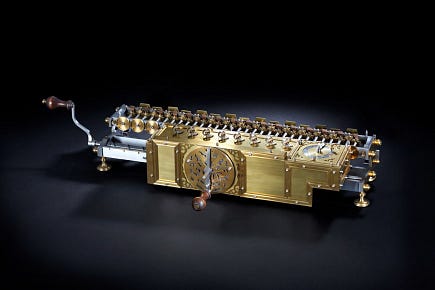
Nothing is which is devoid of history, a history particular to it, through which it’s reality is in fact realized. The World itself is no exception, and by this I don’t mean Cosmogony. Above, in the passages quoted from the estimable Leibniz, one quickly gets a distinct sense of the combinatoric approach to the topic, of his sense of compossibility and permutation and compounding infinities, and this is something that really shouldn’t surprise us, as it’s for his contributions to Calculus and combinatorics that’s he’s usually most known today, rather than for his doctrine of Worlds and their metaphysical construction and optimization. Yet these two areas are inseparable in his work and influence one another symbiotically. And isn’t this always actually the case? Not simply for Leibniz, but for the development of the metaphysical conception of World on the one hand, and the development of science and technology on the other?
Leibniz in his work on World is taking crucial steps to what will eventually follow, but did he invent the World? No, as one can surely go far back into antiquity to concepts like the Greeks’ Kosmos and quickly establish a tradition, yet what Greek wrote the Theodicy? Which one among them brought to the topic the mathematical sophistication of Leibniz and his combinatorics? The Greeks, after all, could not compute precisely the area of shapes except by means of the method of exhaustion, which was not an exact calculation, but algorithmic approximation. It was Leibniz who in fact solved a problem they were unable to, in his elaboration of Calculus. What though allowed this breakthrough? The concept at stake is in fact the Infinite, as precise calculation of area in these problems by means of exhaustion ideally necessities an infinite procedure to achieve total exhaustion. It is the way in which Calculus treats Infinity that makes possible exactitude by means of integration.
The difference between calculus and the method of exhaustion then is nothing less than the difference between Leibniz’s account of World and the role of Inifinity within it, and the ancient conception of Kosmos. Which is to say the whole matter is not a question of etymology or simply the existence of words being used to describe a thing, but a great deal more in point of fact. The science of World has a history, and progresses symbiotically, and necessarily with the progress of every other field of science, and even progress in technology, industry, government, infrastructure, and everything else one may wish point to.
As the metaphysicians of the 17th and 18th centuries explicated World, British East Indiamen plowed the seas and enclosed the planet Earth geographically into maps and charts. Likewise in the courts of Kings and Princes across Europe scientific instruments were refined and turned into objects not only of measurement, but of art, and were adorned with elaborate carving and gilding that transformed them into imposing ornaments of power. Was it merely all some coincidence, that as Descartes labored over his account of mechanism, and Kircher drew his wondrous machines, that the art of clockwork ascended to new heights of precision? This seems to me unlikely.
Across Europe, as all the above unfolded, so were roads and post systems constructed that increased the regularity and speed of correspondence, which had no less of an effect than transform the economy of Europe into one of letters of credit and finance. Such construction depended though on nothing less than developments in instruments and mathematics, and furthermore, they were projects generally undertaken by gradually growing bureaucratic administrations which centralized power in the nation state and the absolutist government. Such bureaucracies in turn developed an appetite and eventually, an addiction, to tables and books full of data and demanded at every turn more and more quantification, which in turn required new and more precise instruments of measurement.
None of these phenomena are occurring during this time independent of the others, certainly not the development of World, which Metaphysics treats as one of its central subjects of investigation. This World then is nothing short of the conceptual foundation for the scientific, technological, industrial, and methodological progress which has led through centuries to the emergence of global commerce, world trade, instantaneous communication, financial reporting, geopolitical meta-governance through international institutions, etc. Yet in what sense is it actually real? Not in any ordinary and commonplace one. It is, again, the combinatoric compounding of an infinity of infinities represented in terms of a single conceptual construct: World. Nowhere though will you ever encounter such a thing, and the proliferation of disciplines of science and sociology and finance all represent nothing but Modernity’s fevered quest for a complete accounting of the Leibnizian Infinity of Infinities.
The Neo-Liberal world today is realized in quite a unique way which has not yet been properly accounted for by theory, as the result of the processes sketched above the world we know today is more deeply and impossibly interconnected than ever. Today we fly easily from one end of the Earth to the other in under 24 hours and are given an account of the mundane details of seemingly every event occurring in every nation around the globe in real-time through relentless reporting. Fluctuations in the market in Shanghai, in a matter of hours, cause an ordinary American to lose his job in Spokane. Why would anyone ever permit such a dramatic cascade of financial information to be deemed normal, or expected, or natural? It’s nothing short of an absurdity that such things are allowed to occur. Yet it does with great frequency, and it is not as a consequence of any pre-existing causality that it does. Only through the instantiation of system dynamics by Neo-Liberal organizational networks that such relationships are manifested. Only by means of advanced techniques of economic measurement employed to financial abstractions that such delicate changes in equilibrium order can be detected.
To talk of a company feels to us a very straightforward thing. There’s a firm, it owns a factory. It manages the factory. It’s owned by a man in a top hat in Victorian era England. Perhaps two centuries ago this was indeed the norm. A firm was a few lawyers or bankers in an office in London. A company was nothing much more than a single factory or enterprise exclusively devoted to its management. This though has long since stopped being the norm, as since the turn of the 20th century behemoth conglomerations have arisen through more sophisticated legal models of corporate governance which make it possible for a company to own shares of other companies.
Offshore banking is railed against often enough in political discourse in the public sphere, largely for tax evasion, but the nightmare of these practices is far deeper should strike not indignation, but a kind of genuine terror in us. This sentiment I mean sincerely, as the more fully one considers the organizational scheme at work, the deeper one will be ensnared and discover this themselves. Shares of one corporation owned by a businessman or some other fool are handed over to a holding corporation, which owns the shares the businessman wishes to insulate. He then owns only the shares of the corporation which owns the shares. Not only this, but he can, during his financial schemes, use equity in the corporation which owns the shares as an asset, and hand over a portion of the shares of the holding corporation to business partners or whoever he wishes. These individuals may very well, in turn, deposit those shares in other holding companies, with other assets, with shares of other corporations, with shares of other holding companies. The depth of the recursion is beyond comprehension, and in the economy of today, all talk of discrete entities and clear cut ownership quickly dissolve the longer one looks the abyss of global finance in the mouth.
These networks of ownership, and the disposable corporations designed to link institutions together, is but one aspect a the global system which serves to instantiate the infinity of infinities which comprise the World. Similar organizational principles are at work in the world of foundations, think tanks, charities. Even the structure of the United States government often seems to be designed in this manner. So often we hear mention of a certain panel, or task force, or office working somewhere in the federal administration, and you can perhaps be forgiven for naively believing actually locating where it exists within the organizational hierarchy of the state would be an easy enough matter, as its logical enough to expect this. Yet is this actually the case? You can very often easily lose a few hours of your time trying to establish the exact organizational position of one of these panels or task forces when put to task, and I speak from personal experience.
To say the World does not exist, this is the real truth. To say that it does refers to this organizational hydra I’m describing, as it’s only by means of this structure and this approach to organizational design that the infinity of infinities is realized. Not as conceptual totality, but a disfigurement of reality. In the World order of Neo-Liberalism, which is constructed so as to enforce and manifest the fractal dynamics of infinitely compounding possible combinations, we exist only so far as we’re conditioned by these dynamics. We exist only across those dimensions of life and activity so far successfully subjected by the state, banking, insurance, commercial consumption, etc. We are infinitely dimensional beings, separated and disjointed into contortions of humanity. Souls divided and channeled into quantifiable domains of economic, political, ideological activity regulated by the Neo-Liberal world hydra. And this is something I’m sure many people certainly already know.
Why then, is it desirable for the World to exist? Maybe it actually shouldn’t…